HÅFA ADAI / WELCOME
Keeping CHamoru culture rooted, living, and moving forward.
CHamoru Roots Collective (CRC) is dedicated to preserving, practicing, teaching, and sharing CHamoru culture while strengthening community and creating opportunities for future generations to carry it forward.
Who We Are
Rooted in Culture. Connected by Community.
CHamoru Roots Collective was created to strengthen cultural connection and community among CHamoru people living away from the Mariana Islands.
Based within the Camp Humphreys community in South Korea, CRC creates opportunities to learn, practice, preserve, and share CHamoru culture through cultural education, performing arts, community service, and youth engagement.
The CHamoru people are the Indigenous people of the Mariana Islands, an island chain in western Micronesia that includes Guåhan (Guam) and the Northern Mariana Islands of Saipan, Tinian, Rota (Luta), and the northern islands.
Long before European contact, CHamoru ancestors were accomplished seafarers and navigators. They crossed vast stretches of open ocean using sophisticated knowledge of winds, waves, currents, stars, and the natural environment. They built and sailed fast ocean going outrigger canoes and maintained connections between islands across the Mariana archipelago. The National Park Service describes the CHamoru as a seafaring people who settled the Marianas more than 3,500 years ago, while contemporary CHamoru cultural scholarship emphasizes that seafaring remains deeply rooted in CHamoru identity.
Their society developed in the Marianas over generations, producing a distinct language, culture, social system, traditions, and technologies; including the iconic latte, stone pillars unique to the ancient Mariana Islands that remain one of the most recognizable symbols of CHamoru heritage today. These megalithic structures are found nowhere else in the world.
Colonization & Resilience
Beginning with sustained Spanish colonization in the 17th century, CHamoru communities experienced warfare, forced relocation, religious and political transformation, population loss, and successive colonial governments. The Marianas were later divided politically, with Guam becoming a U.S. possession following the Spanish-American War while the Northern Mariana Islands passed through German and Japanese administration before eventually entering political union with the United States. Despite centuries of profound change, CHamoru people maintained and adapted their language, family systems, foodways, cultural practices, values, and connection to the islands.
The Marianas Today
Today, the CHamoru homeland exists under two different U.S. political arrangements. Guam is an unincorporated territory of the United States. The Guam Organic Act of 1950 established its civilian government and conferred U.S. citizenship on the people of Guam. Guam elects its own governor and legislature and sends a delegate to the U.S. House of Representatives. The Commonwealth of the Northern Mariana Islands (CNMI) is a self-governing commonwealth in political union with and under the sovereignty of the United States, governed through the Covenant that established its relationship with the United States.
A Tradition of Military Service
CHamoru communities also have a significant tradition of service in the U.S. Armed Forces. Guam has consistently demonstrated exceptionally high military participation relative to its population. In 2022, Guam’s enlistment rate per capita was more than twice that of the highest-ranking U.S. state, according to the U.S. Government Accountability Office. Among the states, District of Columbia, U.S. territories, and Freely Associated States included in the GAO comparison, Guam ranked first and the CNMI ranked second in enlistment per capita.
A Living Culture
CHamoru culture is not simply a chapter of ancient history. It is a living Indigenous culture carried by people throughout the Marianas and across communities around the world. Today, CHamoru people continue to preserve and strengthen their language, dance, music, seafaring traditions, foodways, family values, arts, cultural knowledge, and connection to the Mariana Islands. CHamoru Roots Collective exists as part of that continuing story; creating space for culture, community, and connection even thousands of miles from home.
© 2026 CHamoru Roots Collective. CRC original graphic design.
Inspired by Ancient CHamoru Pottery
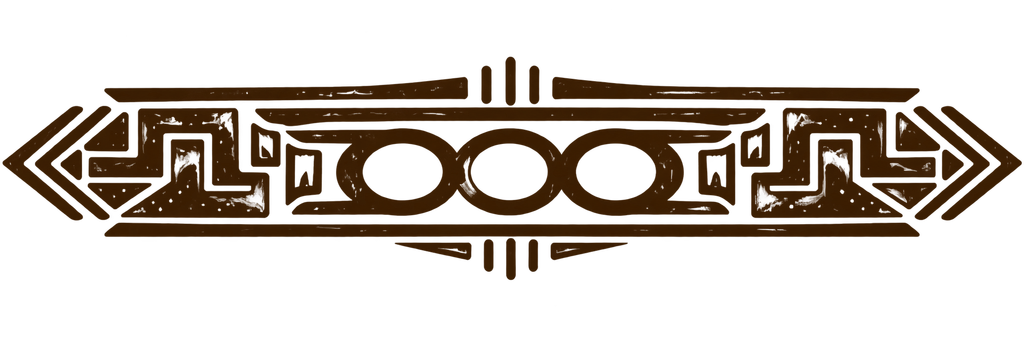
The geometric design used throughout CHamoru Roots Collective’s visual identity was inspired by markings found on ancient CHamoru pottery from the Mariana Islands. Rather than using a generic “Pacific” or “tribal” motif, CRC’s design draws inspiration from archaeological patterns connected specifically to the ancestral CHamoru people of the Marianas. This specific design was created by Pia Arce (CRC President). Our design reflects CRC’s larger purpose: preserving what came before us while carrying CHamoru culture forward in ways that remain visible, meaningful, and connected to community today. Our design is more than decoration. It is a visual connection between our ancestors, our islands, and the generations carrying our culture forward.
Why Pottery?
Across Oceania, geometric designs are often broadly described as “tribal” or “Pacific.” CRC wanted our visual identity to be rooted specifically in CHamoru history and the Mariana Islands. Ancient pottery provides a tangible connection to our ancestors. The markings preserved on these pieces offer glimpses into the creativity, craftsmanship, and visual expression of early CHamoru communities.
From Ancient Markings to a Modern Design
CRC’s design brings selected pottery inspired geometric elements together into a contemporary pattern. The original markings remain the inspiration, while their arrangement creates a visual identity unique to CHamoru Roots Collective. It represents what CRC strives to do as an organization: look to the knowledge and legacy of those who came before us while creating something that can be carried forward by the generations that follow.
What the Design Represents
ROOTS – Our connection to our ancestors and homeland.
IDENTITY – A design intentionally grounded in the Mariana Islands.
CONTINUITY – Ancient inspiration carried into contemporary CHamoru community life.
RESPONSIBILITY – Preserving, respecting, and passing cultural knowledge forward.